Table Of Content
- Read more articles
- Fall Into Season: How to Decorate for Autumn with Fresh, Inspiring Fall Decorating Ideas
- How to Establish Rhythm in Interior Design
- PRINCIPLES OF DESIGN PART 2: RHYTHM
- Choosing an Expert: Interior Decorator Near Me or Havenly Online Interior Designer?
- - Balancing Similarity and Difference: Achieving Repetition in Interior Design
- Look to your staircase to understand gradation
- - Progression through Gradation: Moving the Eye in Interior Design

It follows a formal approach, where objects or patterns are evenly distributed on either side of a central axis, resulting in a sense of stability and order. Rhythm and harmony offer a framework for expressing our unique personal style in interior design. By understanding the principles of rhythm and harmony, individuals can create spaces that reflect their personalities and preferences.
Read more articles

All the Eames' plywood designs combined an elegant organic aesthetic with a love of materials and technical ingenuity. George Nelson, head designer at Herman Miller, the US furniture group, persuaded the company to put some of the Eames’ designs into production. Entertainment rooms, master suites, and outdoor spaces are just a few of Raquel’s specialties. To learn how your space can be transformed, book a complimentary consultation today.
Fall Into Season: How to Decorate for Autumn with Fresh, Inspiring Fall Decorating Ideas
We generally see opposition rhythm through the use of complementary colors, shapes (round vs. angular), or textures (soft vs. rough) to create interest through visual variety. To achieve repetition rhythm in your design, you can repeat key elements like colors and fabrics. You can also create levels and a sense of rhythm on a smaller scale, such as by styling a shelf with a collection of different shaped and sized objects. Interior designer, Alison Wilkinson, shares her top tips for shelf styling below.
How to create balance in interior design: 7 rules to follow - Homes & Gardens
How to create balance in interior design: 7 rules to follow .
Posted: Fri, 03 Mar 2023 08:00:00 GMT [source]
How to Establish Rhythm in Interior Design
By thoughtfully incorporating these principles, an interior designer can create a cohesive, visually interesting, and inviting space. Soft furnishings, such as cushions and rugs, can be a simple yet effective way to achieve repetition in interior design. Using similar patterns or colors in different soft furnishings can create a cohesive and harmonious look in a space. For example, using cushions on chairs, sofas, or beds with repeating patterns or colors can create a cohesive and interesting look. However, it’s important to use contrast in moderation and balance it with other design elements in the space. Too much contrast can be overwhelming and make the room feel chaotic, while too little can make it feel bland and uninteresting.
The easy, smooth, continuous flow from one point to another point in the interior defined as transition leads to the formation of rhythm in interior design. Stairs are a great example of gradation, allowing the gaze to move seamlessly between floor levels. Differing sizes of objects such as floor vases or seat cushions can create rhythm through gradation, or a cluster of different sized candles on a tray will create interest due to the progression they exhibit.
Choosing an Expert: Interior Decorator Near Me or Havenly Online Interior Designer?
You can achieve contrast through shapes, colors, light and dark elements, styles, and materials. Complementary harmony utilizes contrasting colors from opposite sides of the color wheel. By pairing colors that are opposite each other, such as red and green or blue and orange, a vibrant and energetic visual impact is achieved. Complementary harmony creates a sense of tension and excitement while still maintaining balance.
It’s a design element, usually a shape, that subtly assists in navigating a space. Remember to consider both the functional and aesthetic aspects of lighting when designing your space. A well-designed lighting scheme can transform the atmosphere and enhance the overall aesthetic, making your interior design truly shine.
Look to your staircase to understand gradation
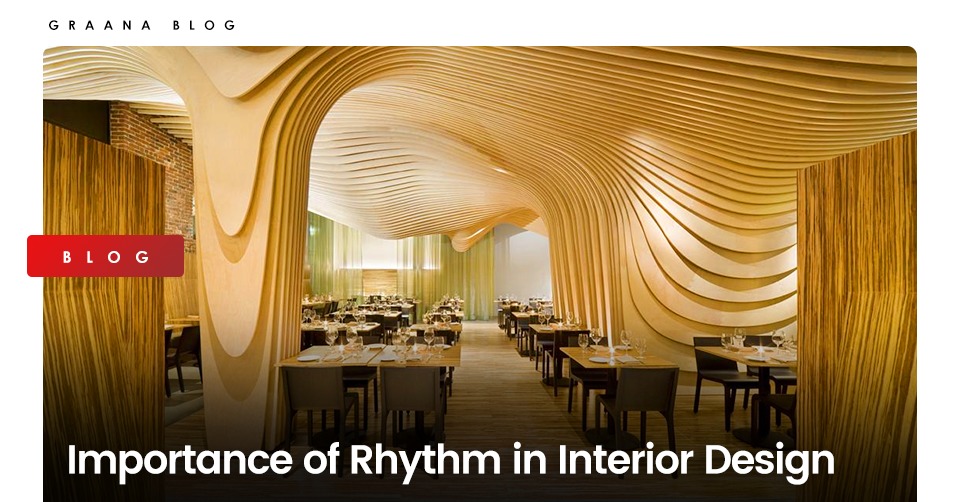
Arches, modern curved furnishings, scenic windows, and curved staircases all play a part in creating transitions in a space. The most common example of this is monochrome décor, where black and white are colours that are complete opposites of one another, and yet, when used together, create a jarringly beautiful result. Very rarely heard of and even rarely used, radial balance deals with the presence of curved structures in the interior, including staircases, circular dining tables, chandeliers, and more.
Designers can use gradation in lighting, furniture, and decorative accessories. For example, a series of pendant lights with varying sizes or colors can create a sense of progression and lead the eye from one end of the room to the other. Similarly, using furniture pieces that gradually increase or decrease in size can create a sense of movement and flow in a space.
The color scheme is kept simple, with a neutral base accented by pops of blue and green. Just like in music, rhythm in interior design ties all the design elements together in a subtle pattern, resulting in a well-executed and aesthetically pleasing space. Combining patterns and colours is yet another excellent tactic used by experts.
Rhythm in interior design is created by the simple, continuous flow from one place in the interior to another, known as a transition. You want to feel fully immersed in a design as soon as your step into a room, and by establishing a sense of rhythm and flow, you will be guided through each chapter of the design with ease. A design with too much repetition can become monotonous, while a space with too much contrast can become disorganized. It is important to find a balance that results in a pleasing visual rhythm that permeates the entire area,' says Artem Kropovinsky. One can also achieve gradation through colour, whether a monochrome scheme with each element in a slightly different shade or the ombré trend which embraces colours progressing from light to dark. Introducing rhythm through transition leads the eye through a continuous, uninterrupted flow from one area to another.
Uniting a collection of different shapes will help to add eye-catching visual interest and character to a space, and this is mainly achieved through the furniture, lighting and accessories you choose for a room. It’s a natural fit for staircase ideas, as repeating steps create a steady progression from one floor to the next. Your eye knows exactly how to move through this space (up, down), and it’s why choosing a patterned staircase runner or a striped carpet can double down on this linear flow.
There needs to be one object or architectural feature that draws attention when you enter the room. Fireplaces, both real and fake, also perform the same function, aside from providing warmth and adding to the aesthetics of the interior. Another way to use contrast in your decorating is to pair colors that are opposites on the color wheel, like red and green or blue and orange, to create a strong sense of contrast. When you sign up for Havenly, you will take a short quiz about your design style and what you are looking for in a designer.
Studio 9 creates bold, organic, and contemporary spaces for residential interiors. We have been transforming homes and earning a reputation as a top Los Angeles interior design firm since 2008. The principle of scaling refers to both scale and proportion of objects in comparison to the room itself. Small furnishings in a spacious room feel dwarfed by the dimensions of empty spaces, while bulky furniture in a small room can overcrowd it to a point that it becomes unbearable.


No comments:
Post a Comment